Lore
What the runes remember
The myths behind the name, the twenty-four staves of the Elder Futhark, and an honest line between what the sources tell us and what came later.
The name
Yggr, the Tree, and the Well
Yggr, “the Terrible One,” is one of the many names Odin goes by in Old Norse poetry. The World Tree, Yggdrasil, is usually read as “Yggr’s steed.” In skaldic language, the gallows is a horse its rider cannot get down from. The Tree is named for the god who hung on it.
In the Hávamál, Odin speaks of hanging there for nine nights, spear-wounded, given “myself to myself,” with no bread and no drink. He looks down, takes up the runes screaming, and falls back. The runes are not invented. They are won, at a cost.
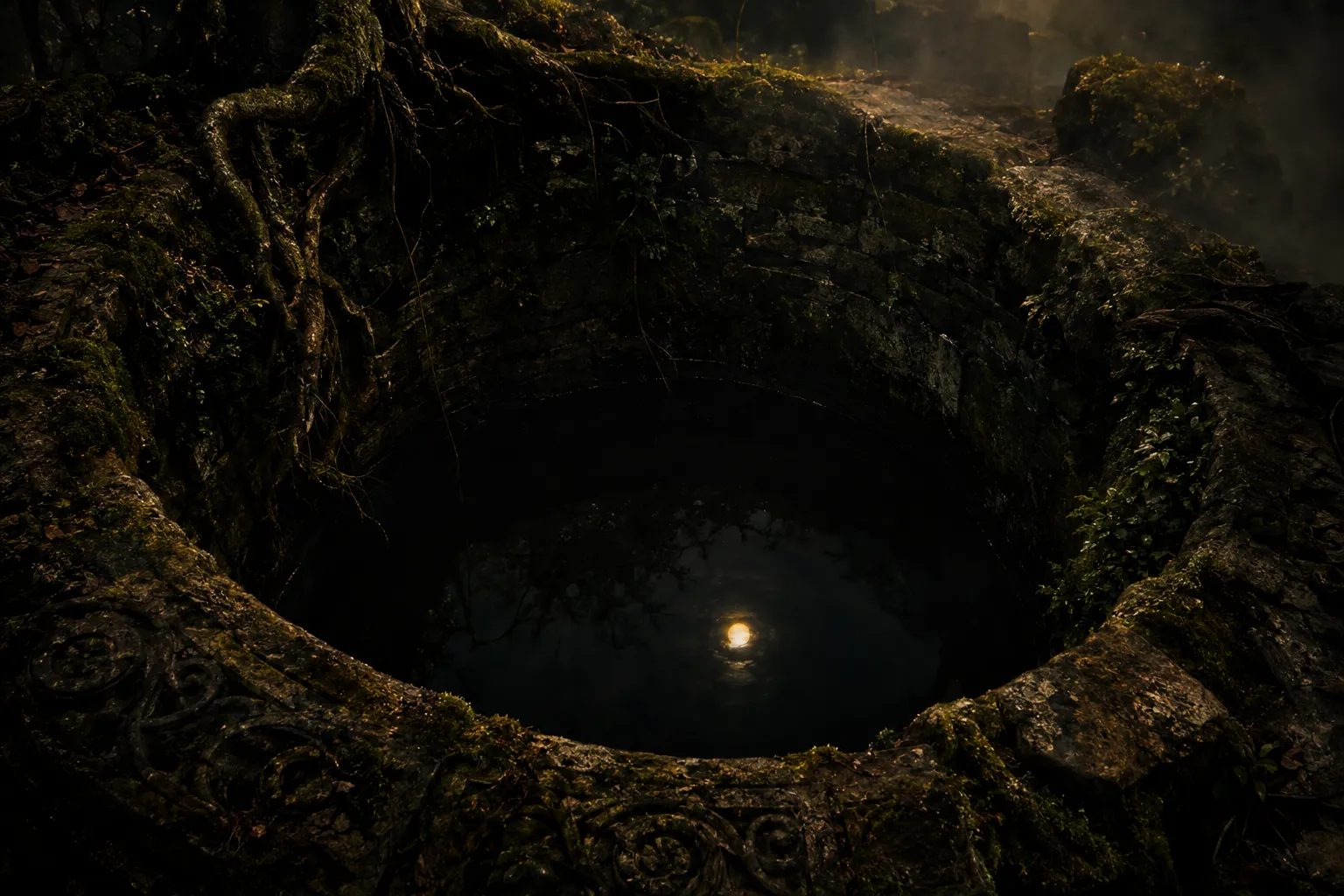
The eye comes from a second story of sacrifice. At the roots of the Tree lies Mímir’s well of wisdom, and Odin gives one of his eyes for a drink from it. The Völuspá says the eye is still there, pledged in the water. Yggr’s Eye is the part of the god that stays at the roots, watching what is hidden.
I know that I hung, on a wind-rocked tree,nine whole nights, with a spear wounded,and to Odin offered, myself to myself;on that tree, of which no one knowsfrom what root it springs.
Even the word carries the idea. In the old Germanic languages, rune means a written letter, and it also means a secret, a mystery, something whispered.
The Elder Futhark
Twenty-four staves
The oldest complete listing, carved on the Kylver Stone on Gotland around 400 AD, gives all twenty-four in order. The names used here are scholarly reconstructions. No names survive from the Elder Futhark period itself; they’re worked back from the later rune poems.
First row
f · u · þ · a · r · k · g · w- Fehu/f/Cattle, wealth
- Ūruz/u/Aurochs
- Þurisaz/þ/Giant (thurs)
- Ansuz/a/A god, one of the Æsir
- Raidō/r/Ride, journey
- Kaunan/k/Sore; torch in Old English
- Gebō/g/Gift
- Wunjō/w/Joy
Second row
h · n · i · j · ï · p · z · s- Hagalaz/h/Hail
- Naudiz/n/Need
- Īsaz/i/Ice
- Jēra/j/Year, good harvest
- Eihwaz/ï/Yew
- Perþō/p/Uncertain
- Algiz/z/Elk, or protection
- Sōwilō/s/Sun
Third row
t · b · e · m · l · ŋ · d · o- Tīwaz/t/The god Týr
- Berkanan/b/Birch
- Ehwaz/e/Horse
- Mannaz/m/Man, humankind
- Laguz/l/Water, lake
- Ingwaz/ŋ/The god Ing
- Dagaz/d/Day
- Ōþalan/o/Inherited land
The three rows of eight are called ættir. The names Freys ætt, Hagals ætt and Týs ætt are later Icelandic terms for the Younger Futhark’s groups, applied back to the Elder rows. The early carvers didn’t record names for them.
An honest line
What’s attested, and what’s modern
From the sources
- The rune shapes and their order, from inscriptions like Kylver
- Rune names and imagery from the Old English, Norwegian and Icelandic rune poems
- Odin’s winning of the runes, from the Hávamál
- Casting marked lots onto a white cloth, described by Tacitus around 98 AD. He calls them “certain marks” and never says runes.
Modern practice
- Fixed “upright” and “reversed” meanings
- Spreads such as past / present / future
- Rune correspondences with moon phases, zodiac signs, or crystals
- The blank rune, a 1980s addition
None of this makes modern practice worthless. It makes it modern. In a reading, I’ll tell you which is which.